
How to Really Know Your Audience
+ 4 Ways to Research
Marketing is about the audience, the prospect you’re attempting to reach. Experienced marketers have the ability to understand their audience on such a deep level that they can make the claim “I know you better than you know yourself”.
But you might not be an experienced marketer. You’re probably marketing for a small business (or your own business) and you’re not sure how to reach more people organically.
So how do you get to the point where you know your audience better than they know themselves?
Forget about yourself.
Good marketers research their target audience so they can speak to them on a more personal level. They figure out what their interests are, their emotions, and their pain points. Good marketers push their personal preferences and experience to the back burner and draw from the experiences of others.
But how?
Well, store, website, or social media analytics are a great way to do this. Finding out what time of day people like your content or visit your store the most can help with planning posts. Seeing when in the month or year people make the most purchases can guide discounts, sales, or new product releases.When it comes to social media, see what kind of people like or follow you. What are their interests? Who else do they follow? What specific content seems to do best with different groups? But analytics can only do so much.
Keyword research is another great way. This is figuring out exactly what words people use to describe their problem or the solution they desire. For example, “sponge”, “dirty”, “sustainable”, “dishes”, “cheap”, might be good words to research for a cleaning company. Then they figure out which of these words are mentioned most, which shows which of these are most important to customers. The most popular words should be included in ads, captions, and/or on the company website. That's Search Engine Optimization (SEO), simplified to its basics.
Check out this article from Zapier about the best free keyword research platforms.
You can use Meta's platform to figure out what hashtags are most popular on Instagram and Facebook.
Customer feedback is also good. You can send out feedback forms with questions like “What prompted you to visit/buy?”, “What has your purchase done for you”, etc. Finding the real answers to these questions can help you understand the driving factors behind purchases.
Look into Google forms for quick, basic forms and tally.so if you want to get creative and use conditional logic.
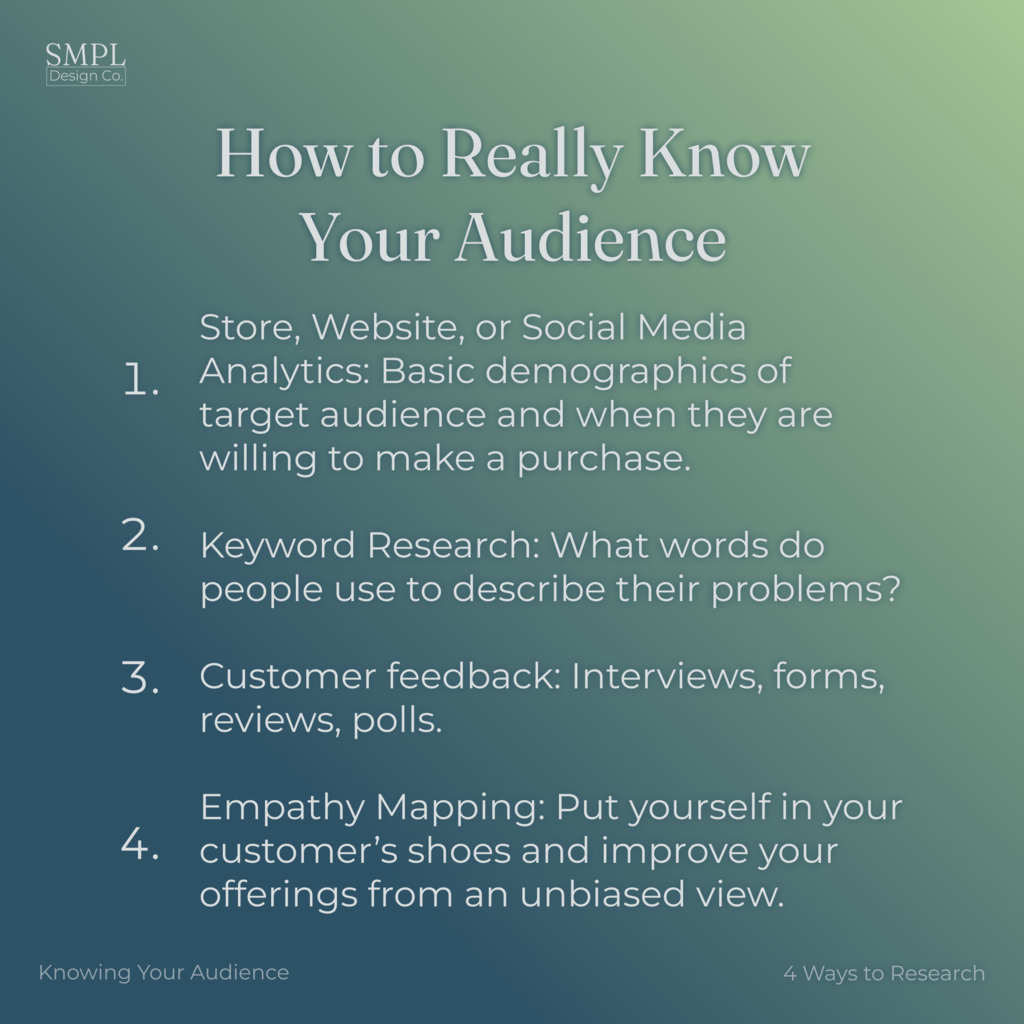
If you don’t have a lot of success with those, then just try putting yourself in your customers shoes. This is called Empathy Mapping, as explained in the links below by Copyblogger Media. You don’t need to do this to an extreme level, it can be as simple as writing down words that you associate with your target audience and their problems.
For example, say you own a restaurant. These are different things that may affect whether or not someone goes to eat at your restaurant vs. a fast food chain down the street.
- Hunger
- Speed of Service
- Quality of food
- Price
- Time of day
- Atmosphere
- General Customer Service
- Community
- Type of food
Now figure out how to make your offerings better than your competition. All your potential customers are indifferent. They’re not rooting against you or for you. They want to make a purchase from the company that makes them feel the best. Brand loyalty starts with one visit, so try to convince all potential customers that your company has what they need. Make your audience want to visit you, rather than anyone else.
If you start to feel lost, go back to the research. Remind yourself who your target audience is and what they want.
If you still feel lost, reevaluate your USP (Unique Selling Point).
Using analytics, keyword research, customer feedback, and empathy mapping is how you address all objections a potential customer may have when making a purchase with you. Good marketers make people want to make a purchase. They don’t even need to convince or sell, the prospect just wants to buy.
Check out CopyBlogger Media for more information on empathy maps:
Empathy Maps: A Complete Guide to Crawling Inside Your Customer’s Head
How Empathy Maps Help You Speak Directly to the Hearts of Your Audience


